ANJA HILBIG
ARCHEO ARTS
Archaeological drawings for research, excavation and publication
© Drawing: DAI Cairo, all rights reserved. Facsimile by Anja Hilbig. Published in: Th. Beckh, “A pot with a view…”. Noch einmal zur Keramikproduktion in Deir el-Bachit, MDAIK 73, 2017, 11-14, Abb. 2. © Dirk Mathesius Fotos
As a scientific illustrator, I support your research projects with many years of expertise. Whether you require highly accurate facsimiles, drawings of archaeological artefacts, or the digital redrawing of existing illustrative documentation to a publishable standard – I produce meticulously crafted visualisations tailored to your research questions.
Spectrum of drawings
facsimiles of reliefs and paintings
of inscribed and decorated objects
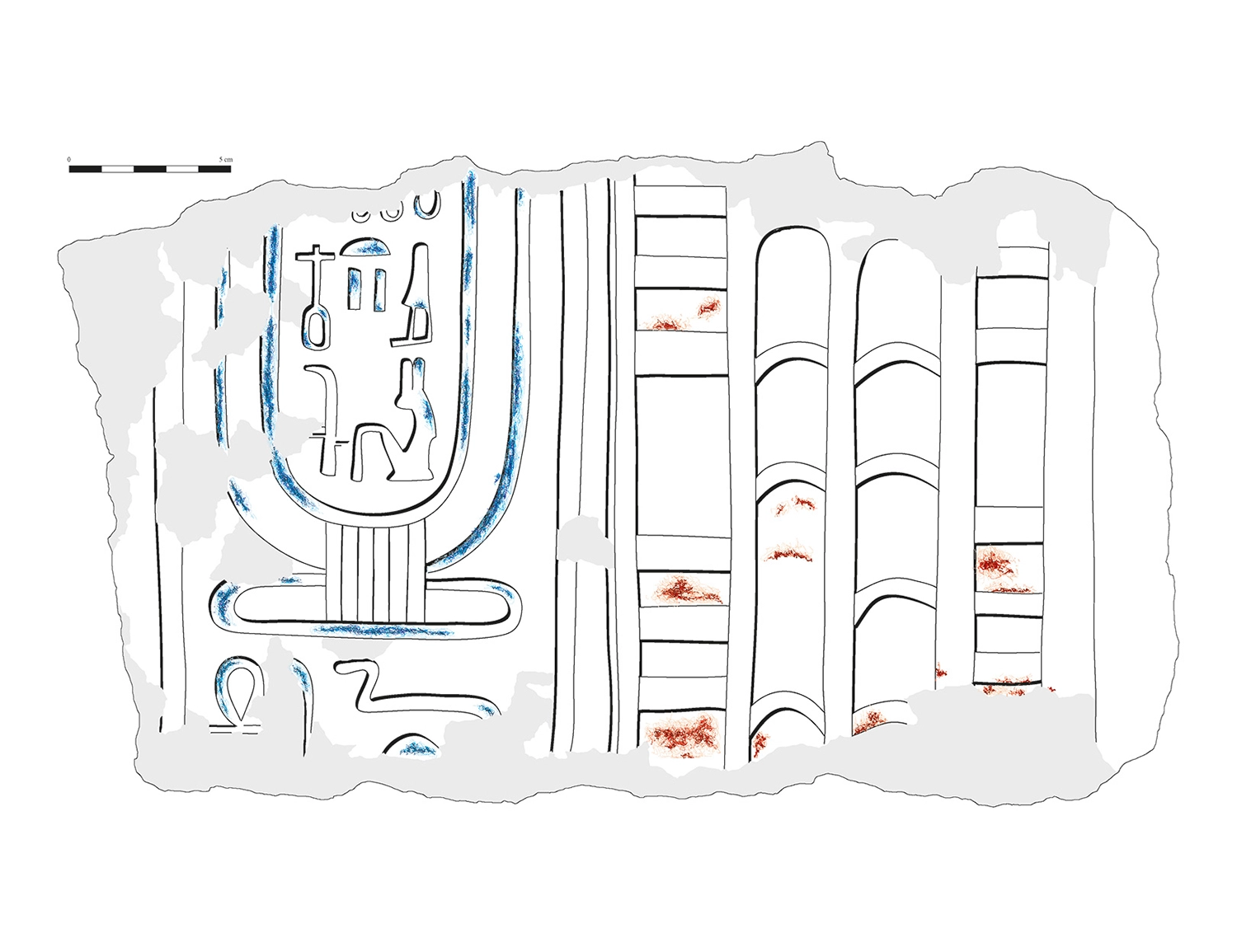
Digitally redrawn facsimile of a temple block with inscription in sunk relief and polychrome painting, from Assiut antiquities magazine Shutb SCA Z36/4 (TA4)
© Institute of Egyptology, Freie Universität Berlin. The Asyut Project.
View reference
J. Kahl – A. Kilian, Asyut – The Capital That Never Was, The Asyut Project 18 (Wiesbaden 2022), Pl. 12b.
archaeological object drawings
with digital tonal shading
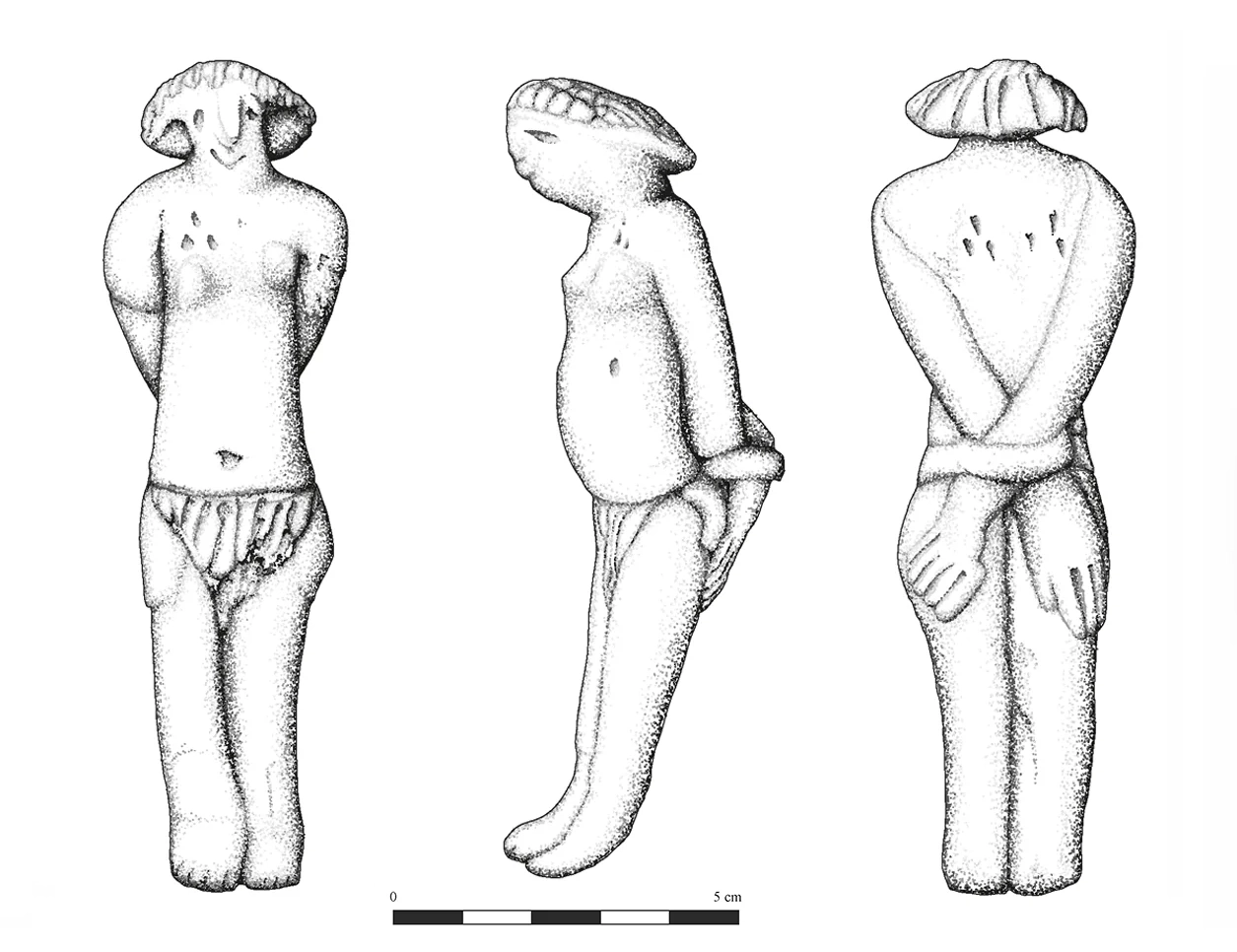
Digitally redrawn object drawing of an execration figurine of the new kingdom made of fired clay, type standing figures D, in three views
© University of Heidelberg, SFB 933 material text cultures, subproject A03-UP1 execration figurines and their deposition
View reference
C. Kühne-Wespi, Ägyptische Ächtungsfiguren und Ächtungslisten im Wandel der Zeit, Altertumswissenschaftliche Abhandlungen 168 (Wiesbaden 2023), 94 Abb. 6.
constructions
and exploded axonometric drawings
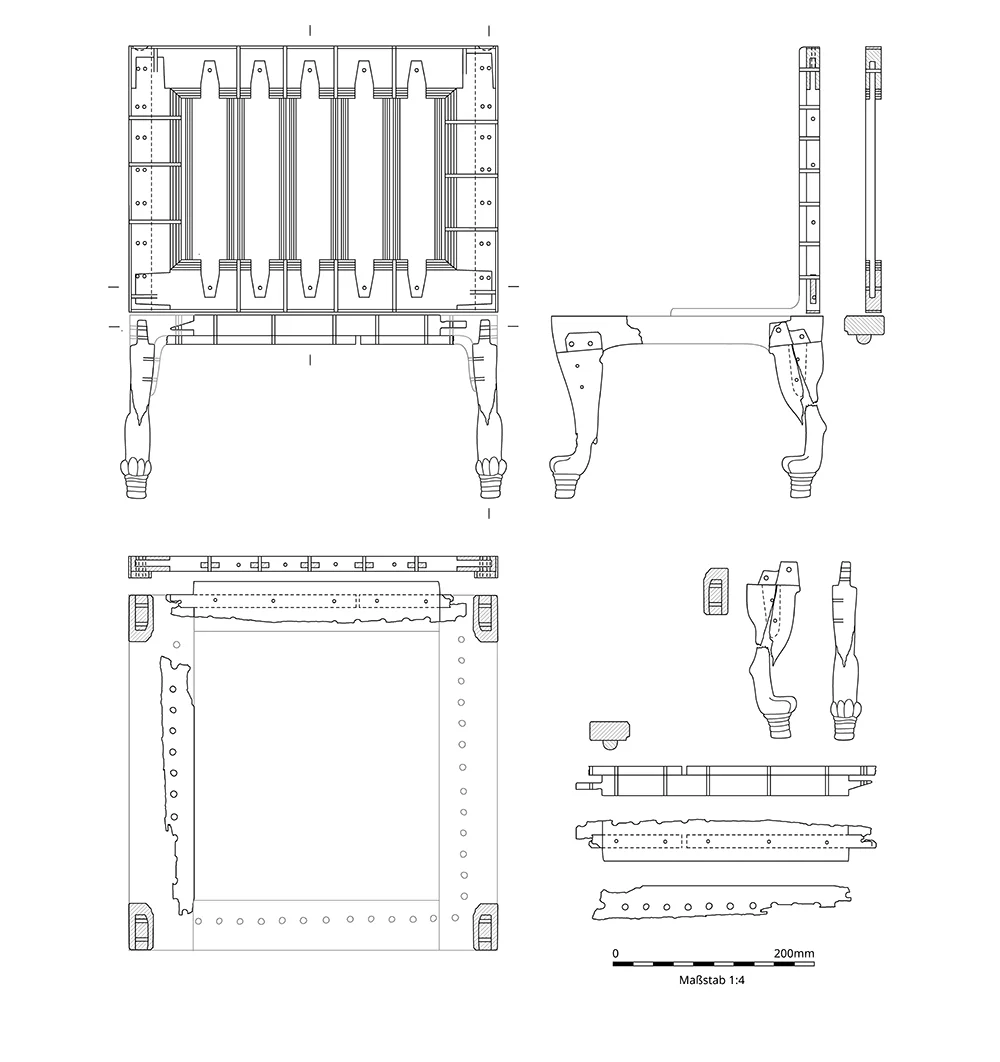
Construction drawing of a chair with backrest from Dra‘ Abu el-Naga. New kingdom period
© DAIK, all rights reserved. Field recording, reconstrction and digitalisation by Anja Hilbig
View reference
A. Hilbig, Dra‘ Abu el-Naga, Ägypten. Möbelfunde in Dra‘ Abu el-Naga, eDAI-F Faszikel 1, 2020, 17–23. https://doi.org/10.34780/efb.v0i1.1004 (mit überarbeiteten Konstruktionsdetails)
site documentation
and section drawings
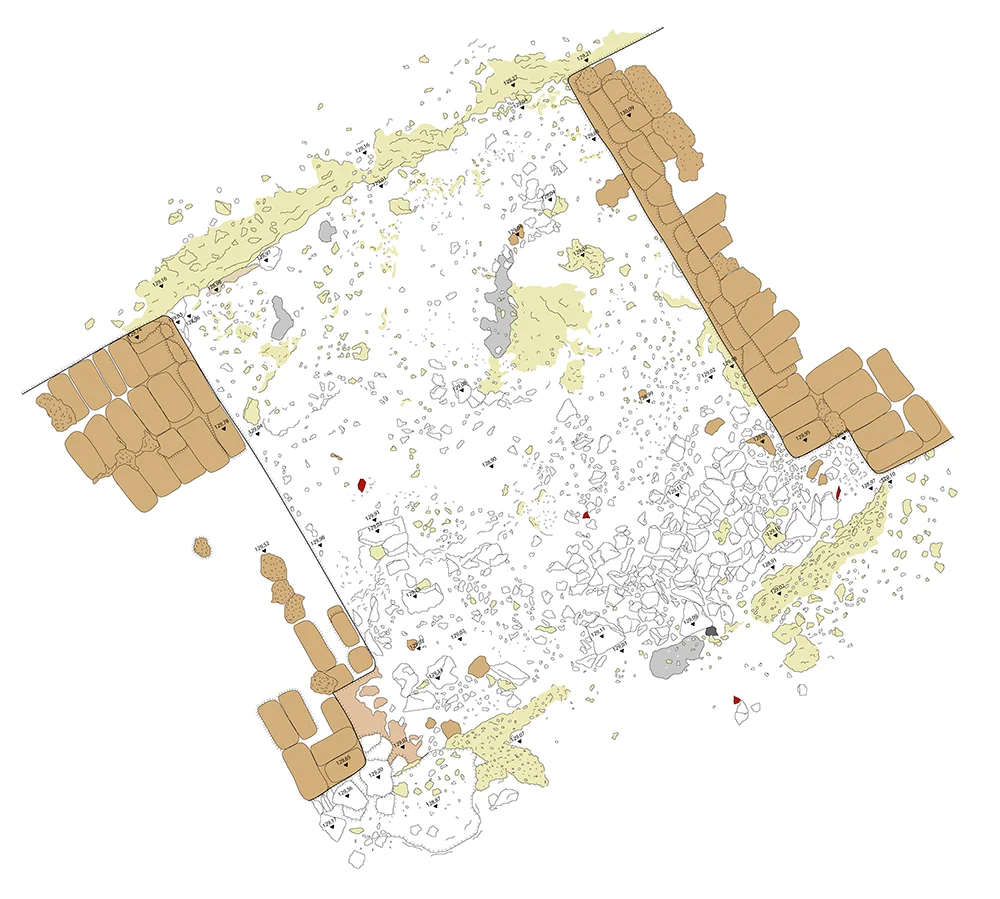
Site drawing of part of the debris layer of the burial complex K93.12 in Theben-West
© DAIK, all rights reserved. Field recording and digitalisation by Anja Hilbig
View reference
Teil des Gesamtplans vgl. U. Rummel, Draʿ Abu el-Naga, Ägypten. Untersuchung der Grabtempel der Hohenpriester des Amun Ramsesnacht und Amenophis (K93.11/K93.12), eDAI-F Faszikel 2, 2015, 4–8, Abb. 2 https://doi.org/10.34780/2a9l-c2l9 bislang nicht eingefügt.
visualisations
for question-driven research
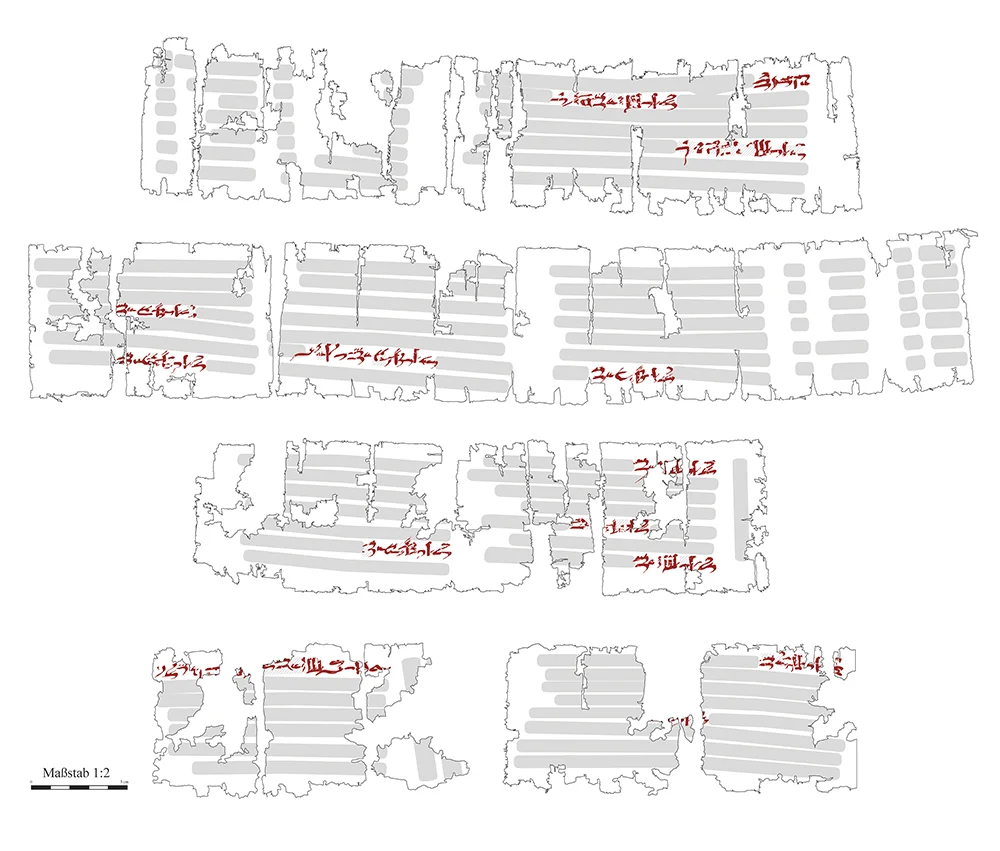
Visualisation of structural elements of parts of papyrus pBerlin 10499. Text lines and columns in grey blocks, rubra in red
© University of Heidelberg, SFB 933 material text cultures, subproject B15 visual structuring devices in egyptian texts on papyrus
View reference
S. Braun, Visuelle Gestaltung von Geschriebenem als Ausdruck antiker Diskurse am Beispiel des Beredten Bauern, in: A. Verbovsek – E. Hemauer – A. Herzberg-Beiersdorf (Hrsg.), Diskurs: Akteure – Gegenstand – Beziehungen, Beiträge des elften Berliner Arbeitskreises Junge Aegyptologie (BAJA 11) 6.5. –8.5.2021, Göttinger Orientforschungen 69 (Wiesbaden 2023), 89–100, Abb. 1-3..
Perfect representation of your research
Anja Hilbig
Archeo Arts
Illustration Services
Customized illustrations with methodological depth
Focus and specialization
All illustrations are produced using the latest version of industry standard software Adobe Illustrator©. Although vector graphics are usually characterized by flat, single-coloured shapes, I employ specialized visualization techniques to create realistic colour and shadow gradients. This results in illustrations that are both faithful to the original and visually engaging.
Methodology and execution
Projects are managed systematically, ensuring the files are ready to publish as well as saved in stable archival formats suitable for long-term preservation. The focus is not only on the graphic execution itself, but also on integration of visual results into the broader research and publication process.
.
Range of illustrations
In addition to facsimiles, artifact drawings, and side documentation, the core of my illustration repertoire includes construction and exploded axonometric drawings of furniture. I also create reconstruction drawings that represent what an object or site used to look like and custom visualizations to present your research results as effectively as possible.
Archaeological expertise
For the past 20 years, I have supported excavation teams in Egypt, institutions and researchers in the clear and publication-ready presentation of finds and contexts.
Drawings and facsimiles are produced directly from the original artefact on site or in museums, or created on a computer using scans and photographic sources. Please feel free to find out more about my early work in Egypt with the Heidelberg Ramesside Project or my long-standing involvement in the German Archaeological Institute’s excavation project at Dra‘ Abu el-Naga (West Thebes).
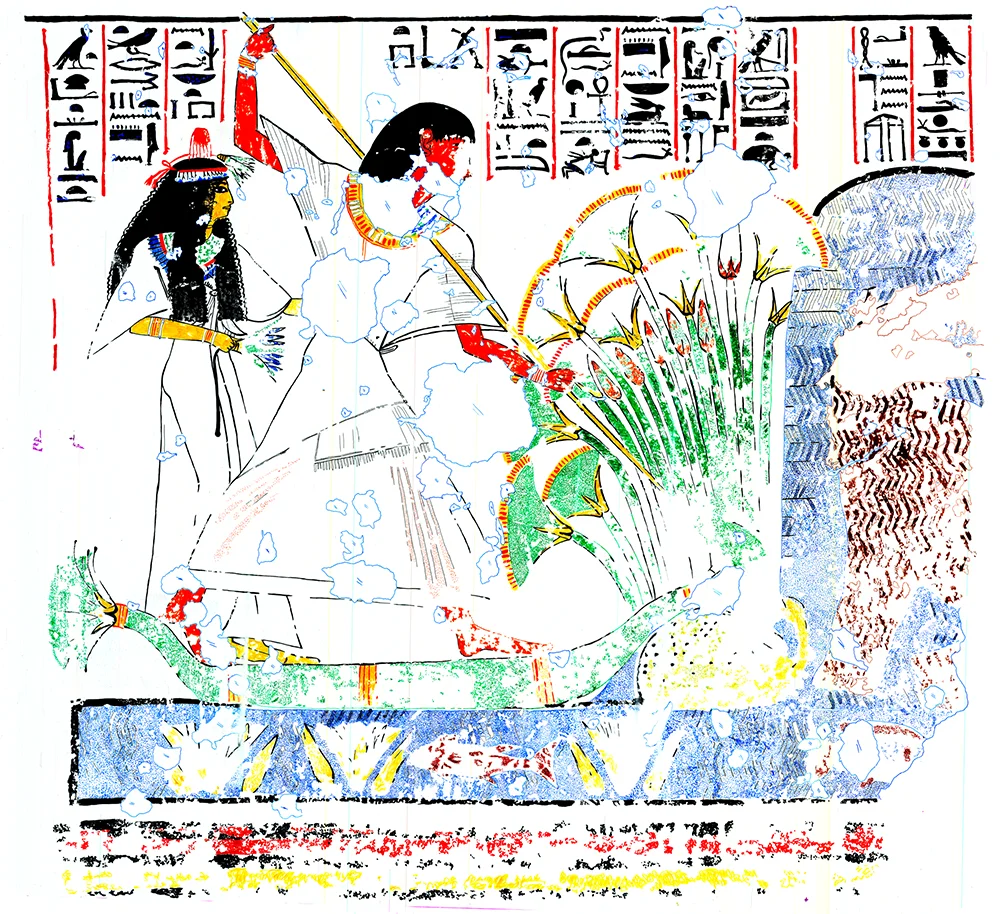
Original facsimile drawing on tracing film (not digitally redrawn) showing the polychrome painted tomb wall of the burial complex of Nebwenenef TT157, long hall
© University of Heidelberg, Ramesside Project in cooperation with the University of Leipzig, tomb complex TT157
View reference
Bislang unpublizierte Auftragsarbeit im Rahmen der Grabungsunternehmung.
Collaboration & Consulting
Solutions for academia, publishers, and cultural heritage institutions
For museums and collections
The creation of facsimiles of decorated iconographic and textual objects, as well as the digital preparation of legacy drawings from private and museum collections – every project is executed in close consultation with the client. Emphasis is placed on ensuring long-term utility for research, publication, and permanent digital archiving.
For philological and textual research
As an experienced epigrapher, I render original inscribed artifacts or photographic records of inscriptions into highly detailed, accurate facsimiles. Furthermore, we can collaboratively reconstruct damaged textual passages and create custom visualizations of textual data to bring your ancient texts back to light.
For institutions and PhD candidates
I am delighted to support you in processing illustration data for your research projects or upcoming publications. This specialized service includes preparing graphics and drawings to a publication-ready standard, and I am happy to remain available during the publication process should any adjustments to the illustrations be required.
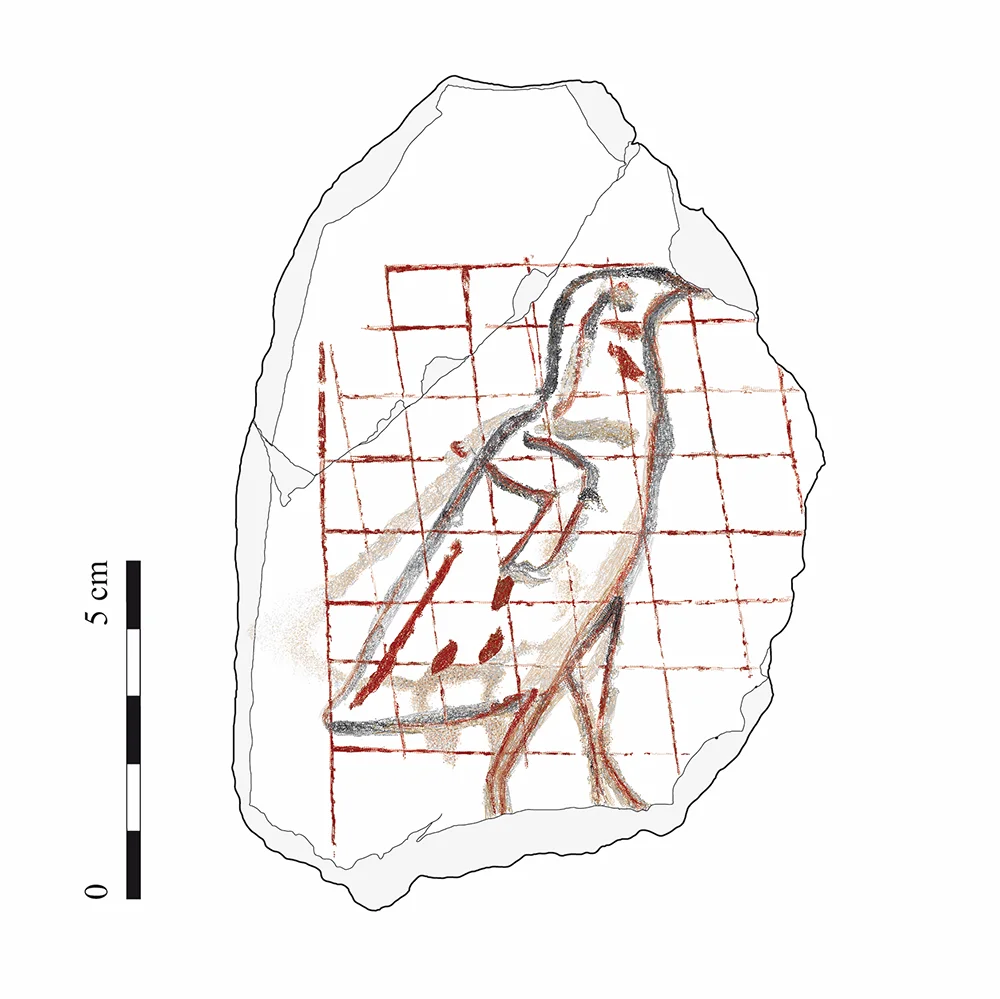
Digitally redrawn facsimile of an ostracon with preliminary drawing and corrections of a quail chick, from Theben-West
© DAIK, all rights reserved. Field recording and digitalisation by Anja Hilbig
View reference
U. Rummel, A document of apprenticeship – A figured ostracon with a squared grid from Dira’ Abu n-Naga, in: K. C. Lakomy – S. A. R. Saddik – R. El-Sayed, Egypt’s Greatest Treasure. Studies in Egyptologie, Museology and Archeology in Honour of Wafaa T. El-Saddik (Wiesbaden 2025) 483-493, Abb. 4.
Commissioned work and research articles
The combination of archaeological expertise and specialisation in drawing enables a wide range of services. Both own projects and commissioned work are carried out with equal rigour and are tailored to the specific research questions at hand.
A complete overview of external illustration projects and my own research contributions is summarised in a separate list of publications. Please feel free to gain an insight into the scope and quality of my work to date
Facsimiles
And their scientific value
What is a facsimile in archaeological documentation?
A facsimile is an exact 1:1 rendering of an inscription or pictorial representation. It is usually generated by tracing directly over the text or motif using a clear film. This process allows for the highly precise recording and documentation of characters, lines, as well as structural damages, cracks, and surface flaking.
This results in a true-to-scale reproduction that can be precisely measured and scientifically evaluated. In contrast to object drawings – which captures the whole physical artifact e.g., the texture and shape – a facsimile isolates and focuses exclusively on the inscription or depiction itself.
Why is a facsimile needed if a photo is available?
A photograph only captures a single technical snapshot under fixed lighting and perspective conditions. It is not a reliable basis for exact measurements, as perspective and optical distortions cannot be completely ruled out.
Furthermore, a facsimile filters out distracting additional information from the textual or visual carrier, enabling a clear scientific analysis of the actual inscription or depiction. Working directly with the original makes it possible to capture fine details that often remain hidden in photography, opening possibilities for further reconstruction.
What does it mean to create a facsimile from a photograph?
The preparation of a facsimile based on photographs is usually done if there is no access to the original, e.g. in the case of destroyed objects or museum and private collections that are difficult to access. In these scenarios, a substantial number of photographs, ideally including scale bars, must be analysed to approximate the original artifact as closely as possible.
By creating facsimiles from photographs, texts and images can be converted into a scientifically evaluable and reproducible format even without physical access to the object. Naturally, the precision of such drawings remains directly dependent on the resolution and quality of the source photography.
Visualising research together
Entrust me with your illustrative documentation and I will adapt it to the context of your specific research questions. Together, we develop appropriate, scientifically robust visualisations for your project work.
I am also happy to prepare drawings from existing archives for publication or to develop bespoke visualisations for specific scientific questions. This combines decades of experience with state-of-the-art technology.
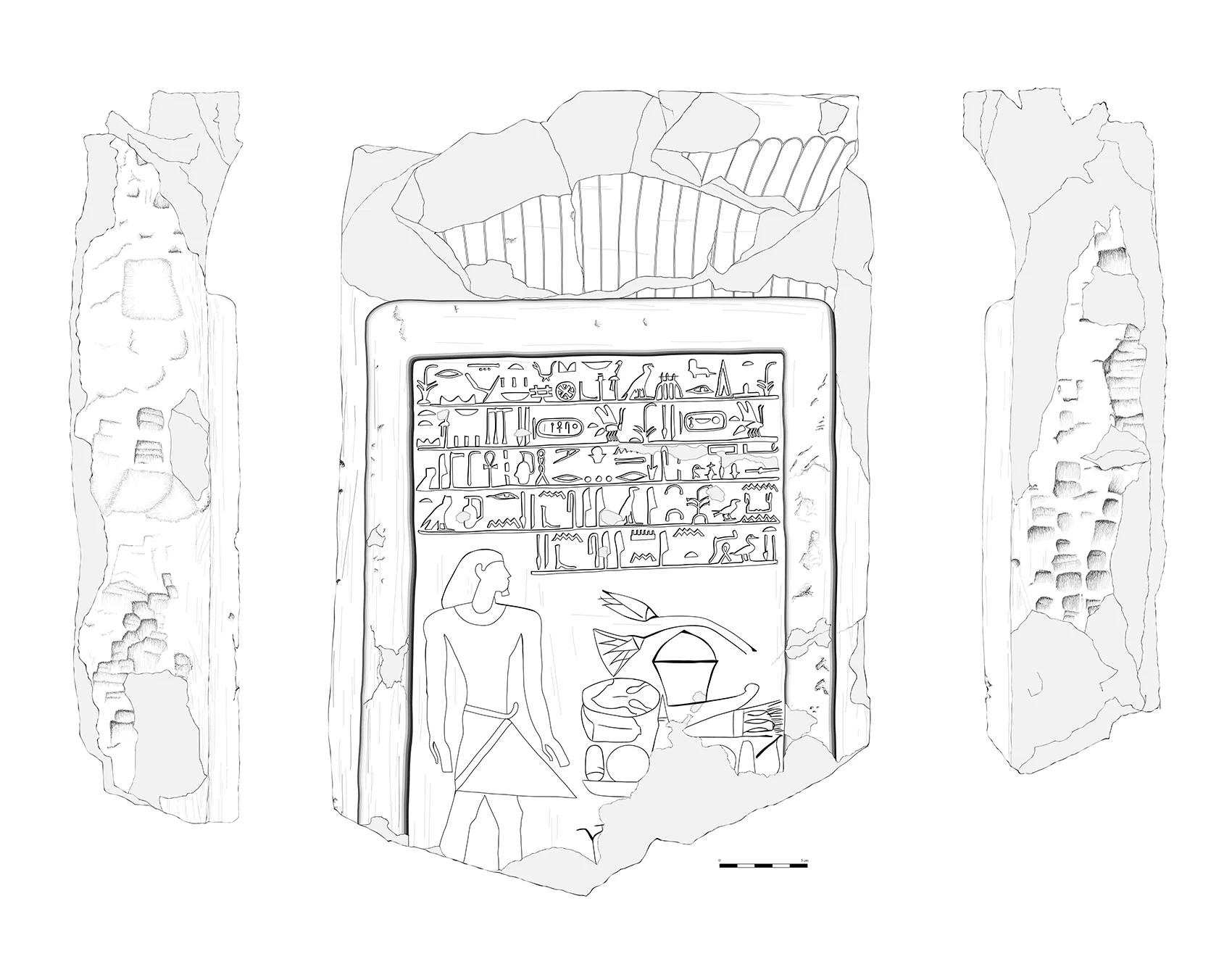
Facsimile of the stela of jayseneb, front side with sunk relief and polychrome painting, framed by object drawings of the left and right stela sides with chisel marks (all digitally redrawn)
© DAIK, all rights reserved. Field recording and digitalisation by Anja Hilbig
View reference
Auftragsarbeit im Rahmen der bislang unpublizierten Abhandlungen zu den Grabstelen der Grabungsunternehmung in Dra‘ Abu el-Naga von Dr. Daniel Polz
Anja Hilbig
Archeo Arts
Unpublished drawing, detail of wooden stela, find number: 0461. Field recording and digitalisation by Anja Hilbig, excavation Dra‘ Abu el-Naga. © DAIK, all rights reserved. © Dirk Mathesius Fotos.
Please feel free to get in touch
for the professional preparation of your drawings
Whether analogue object drawings made directly at the artefact, facsimiles, or digital artwork ready for publication: Anja Hilbig – Archeo Arts supports your graphic documentation from the initial idea through to the finished illustration. Structured, reliable, and with a focus on the long-term usability of the results.
Would you like to enquire about a project or briefly discuss your ideas without obligation? Please feel free to send me a message outlining your ideas, and I will be happy to get back to.